"Transforming Demonstrated Excellence into a Lasting Legacy"
Hover over strategies for insights • Click to expand • Use tabs to explore
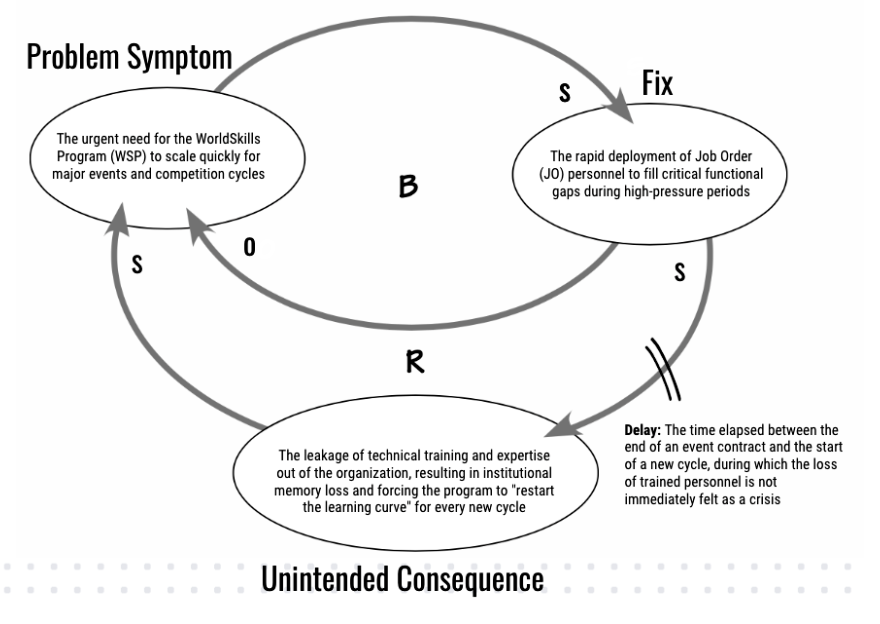
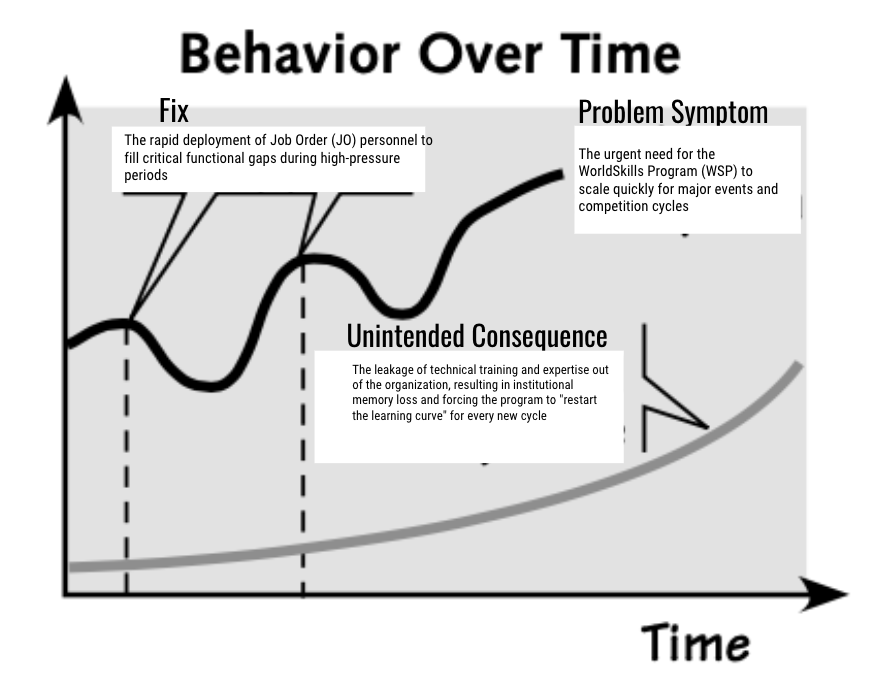
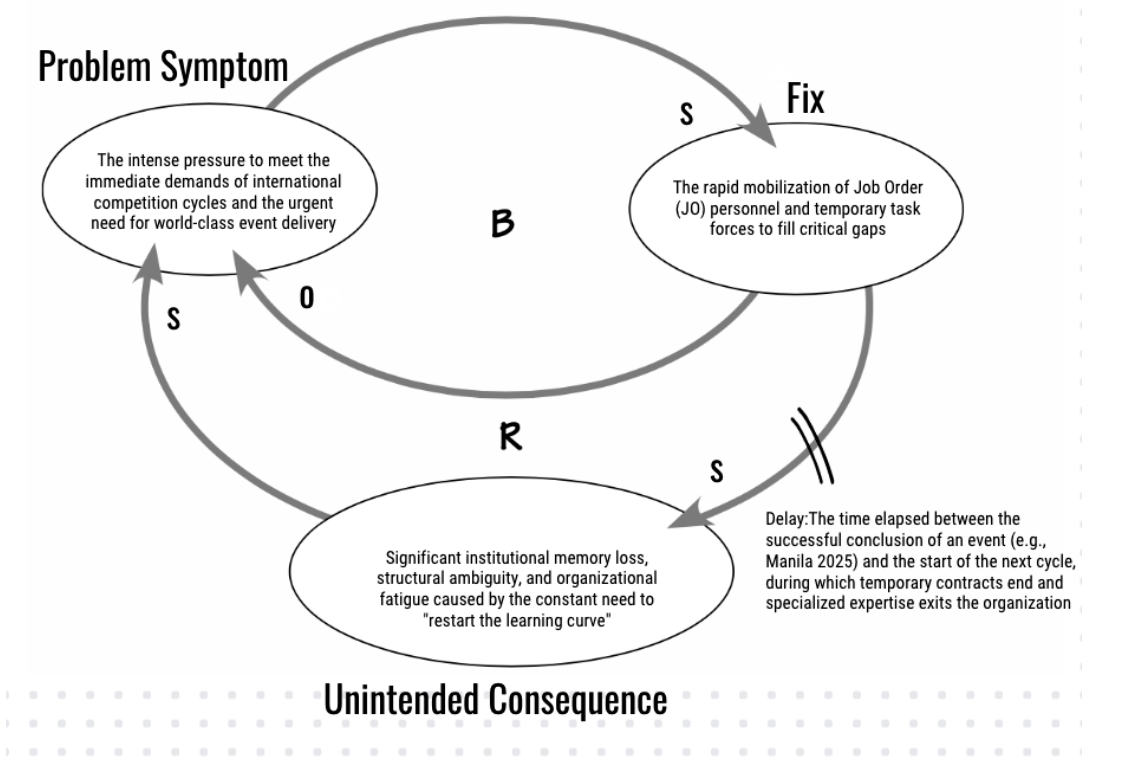
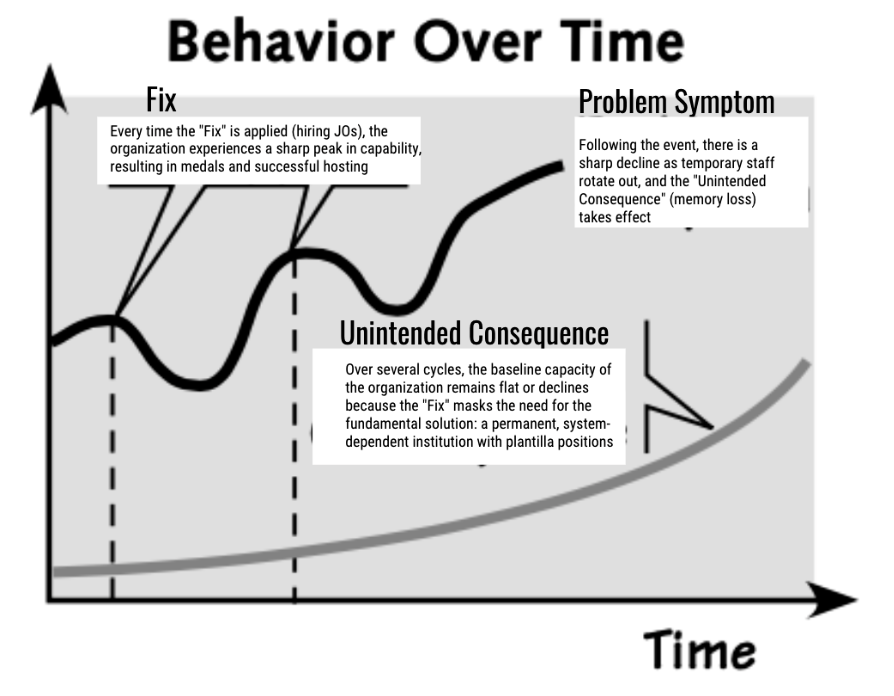
Rapid mobilization of Job Order personnel creates short-term success but undermines long-term institutional capacity.
Like an addiction, JO mobilization provides immediate relief but creates long-term dependency. Each "fix" removes pressure to implement permanent solutions, making the fundamental solution seem less urgent.
Structural Integrity Ratio (Goal 1): Transition from 4 plantilla positions to 20:0 ratio (20 permanent, 0 JO dependency) through permanent national-regional structure.
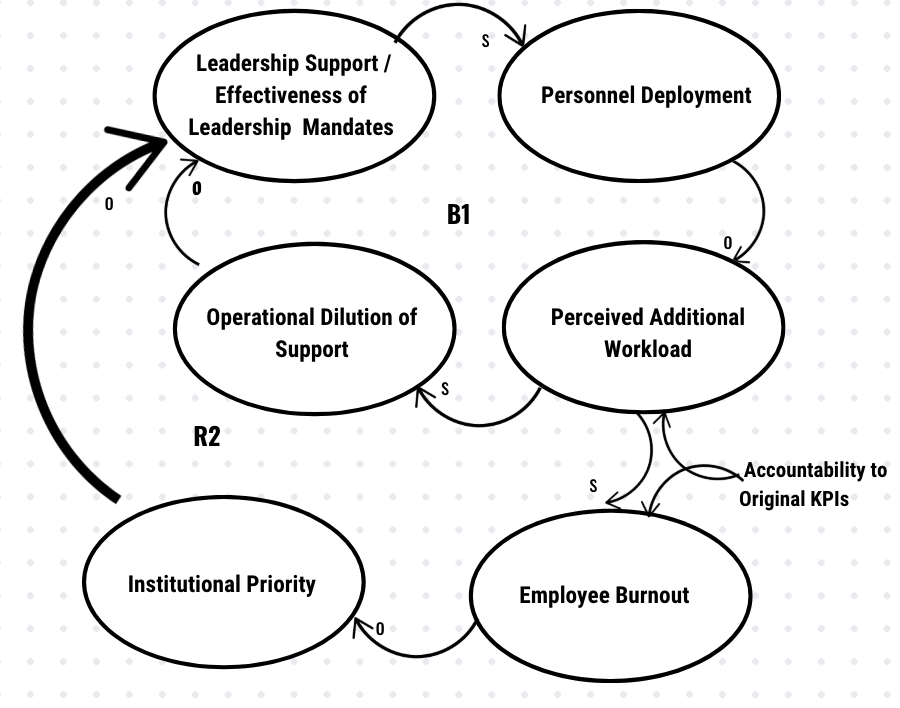
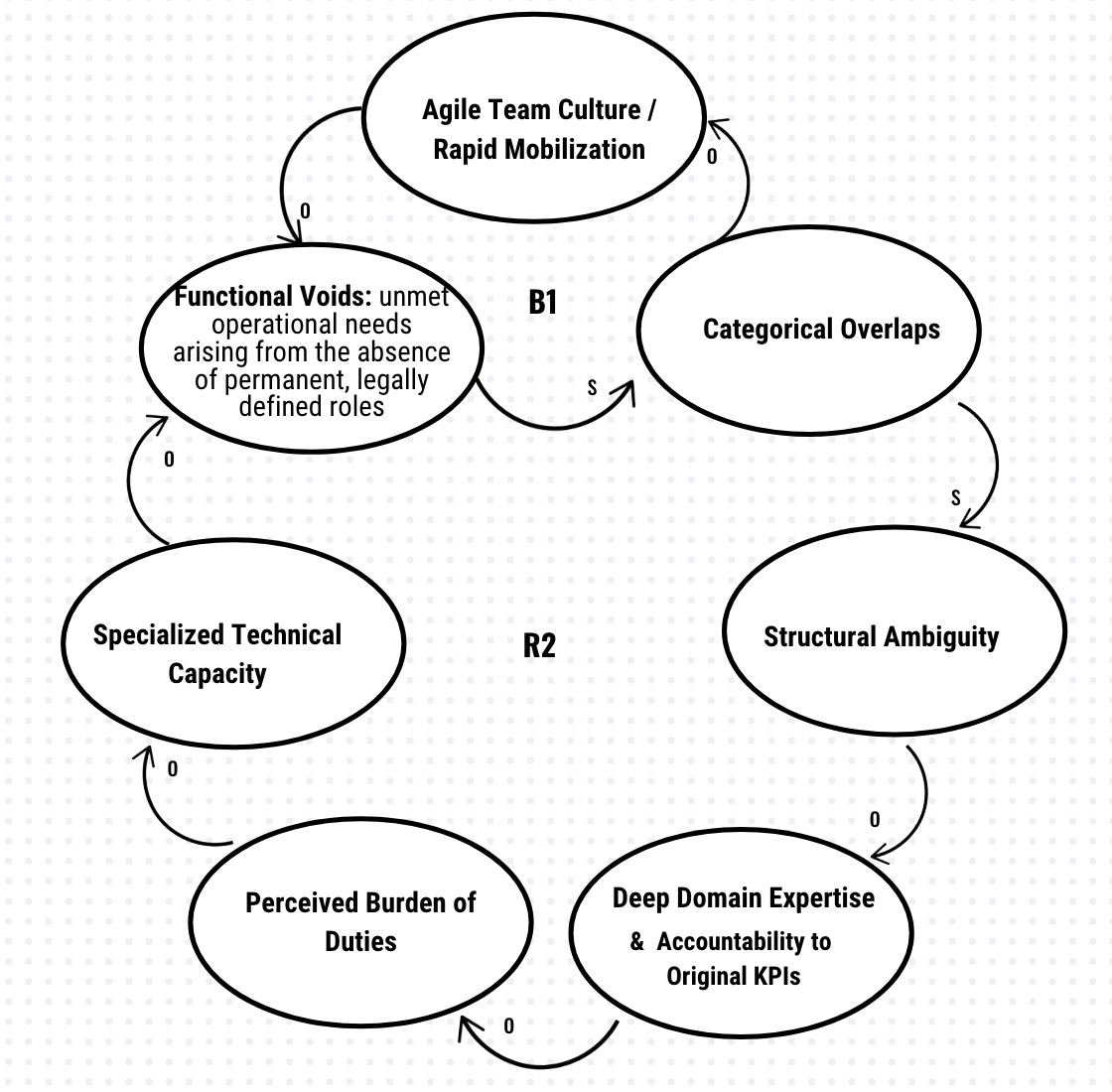
Systemic tension where borrowed staff face conflicting accountability between WSP duties and original departmental KPIs.
This paradox reflects cultural resistance within TESDA's bureaucracy. While leadership support is strong, institutional culture treats WSP as peripheral because staff incentives remain tied to original departments.
MOP Compliance Rate (Goal 1): Formalize WSP roles through Manual of Operations, creating legal clarity and departmental legitimacy.
Absence of permanent roles forces categorical overlaps where admin, technical, and support functions blur.
What appears as "agile flexibility" is actually structural inefficiency. Generalists can respond quickly but cannot build the specialized competencies needed for world-class standards.
Functional Calibration (Pillar 1): Establish three specialized groups (Shield, Core, Nervous System) with distinct mandates, clients, and value streams. See Calibrated Structure.
Speed vs. Sustainability dilemma where rapid deployment enables events but prevents lasting capacity.
Technical training invested in JO personnel "leaks out" when contracts end, forcing the organization to restart the learning curve for every event cycle.
Institutional Memory Coverage (Pillar 3): Implement LMS to preserve knowledge independent of personnel changes, achieving 100% digital coverage of critical expertise.
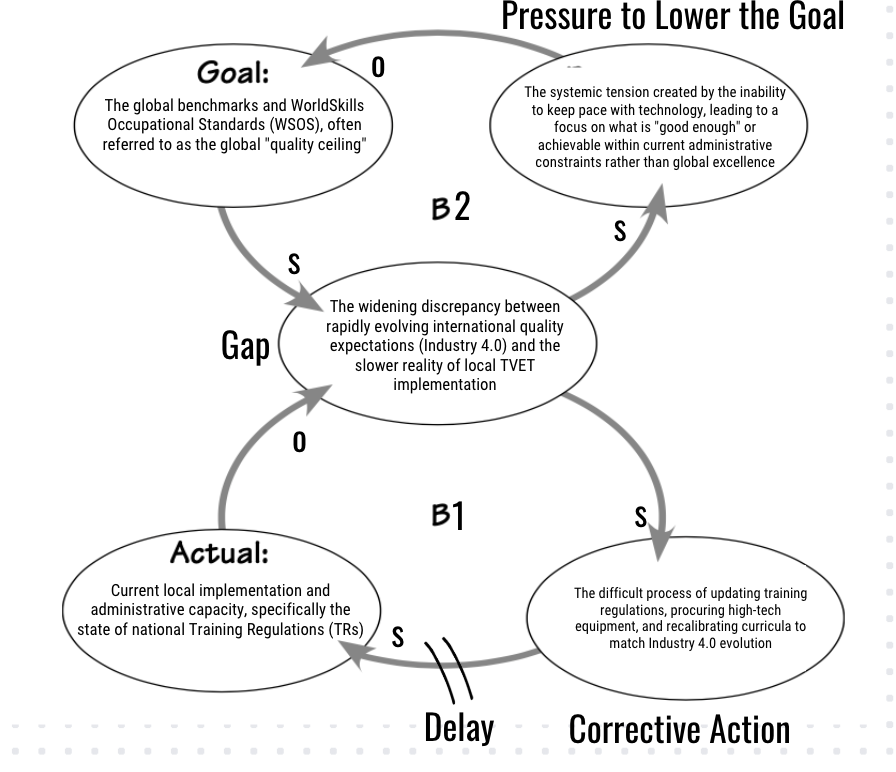
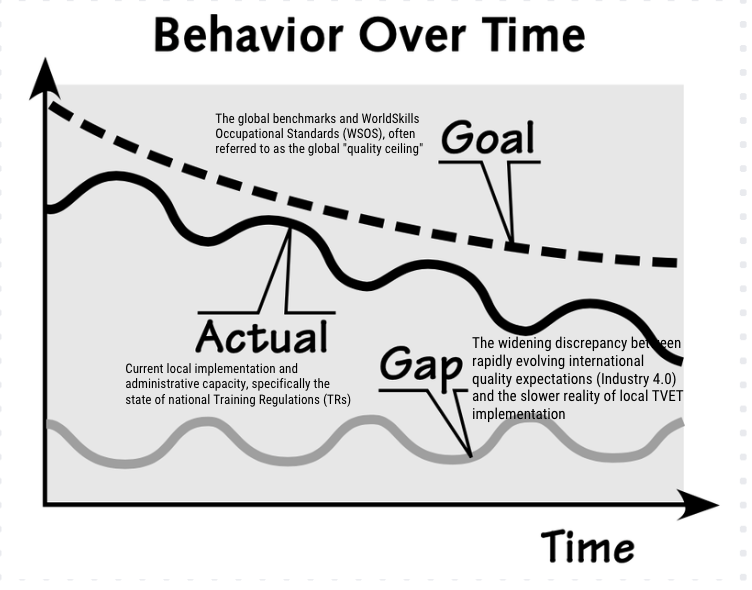
Industry 4.0 evolution outpaces bureaucratic TR updates, risking downward drift of quality standards.
Global benchmarks represent a moving "quality ceiling." Without active alignment mechanisms, local standards naturally drift downward relative to this ceiling due to bureaucratic inertia.
WSOS Integration Index ⭐ (Pillar 5): Embed WorldSkills Occupational Standards into all Training Regulations, creating structural mechanism for continuous standards elevation.
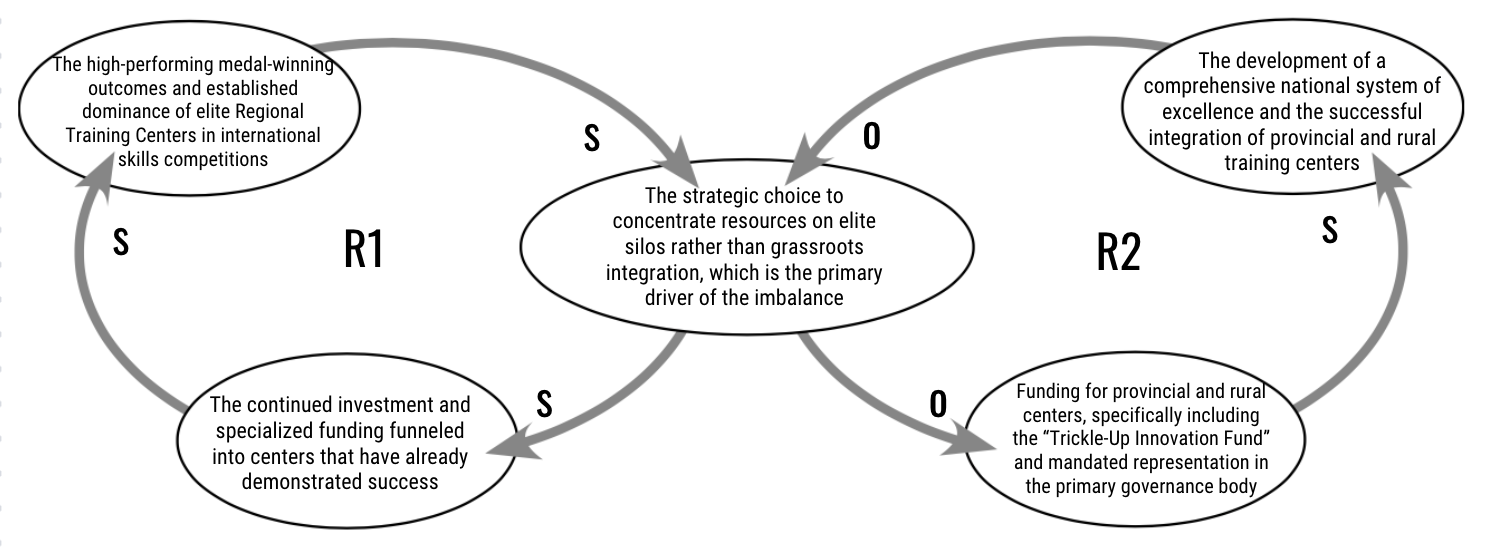
Resource concentration in high-performing centers creates two-tiered system neglecting provincial integration.
"To those who have, more will be given." Without explicit countermeasures, excellence programs naturally concentrate in already-successful centers, leaving the periphery behind.
Rural Inclusion Index (Pillar 2): Mandate ≥30% participation from non-Metro regions, creating structural counterbalance to elite concentration.
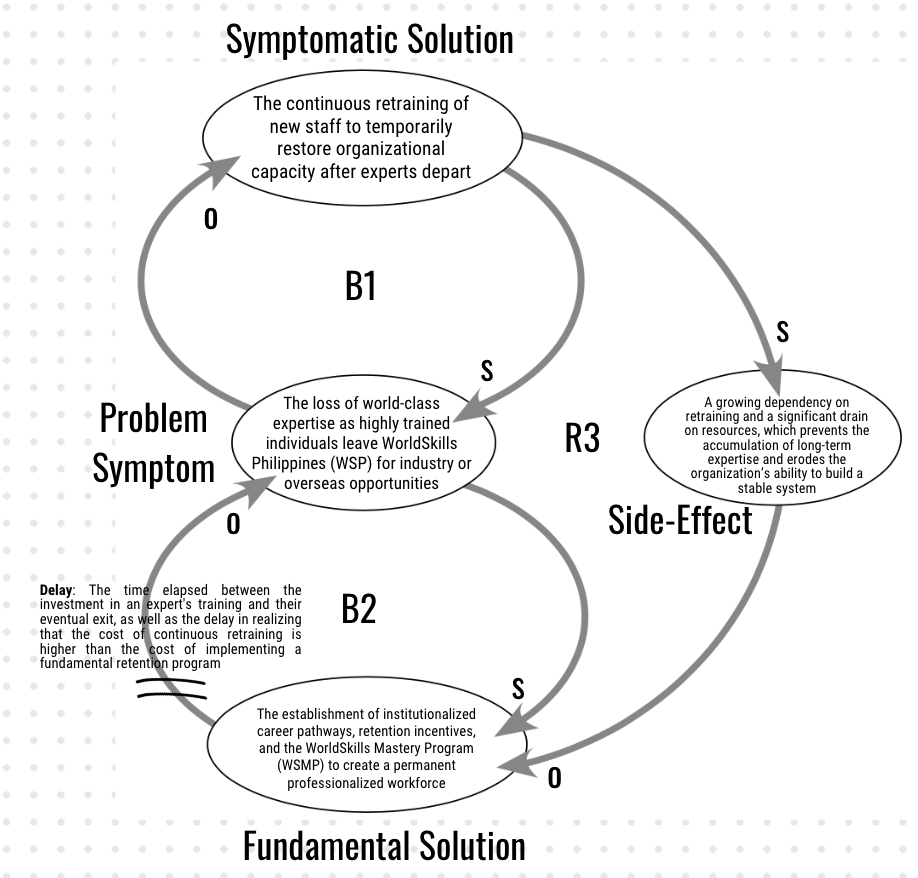
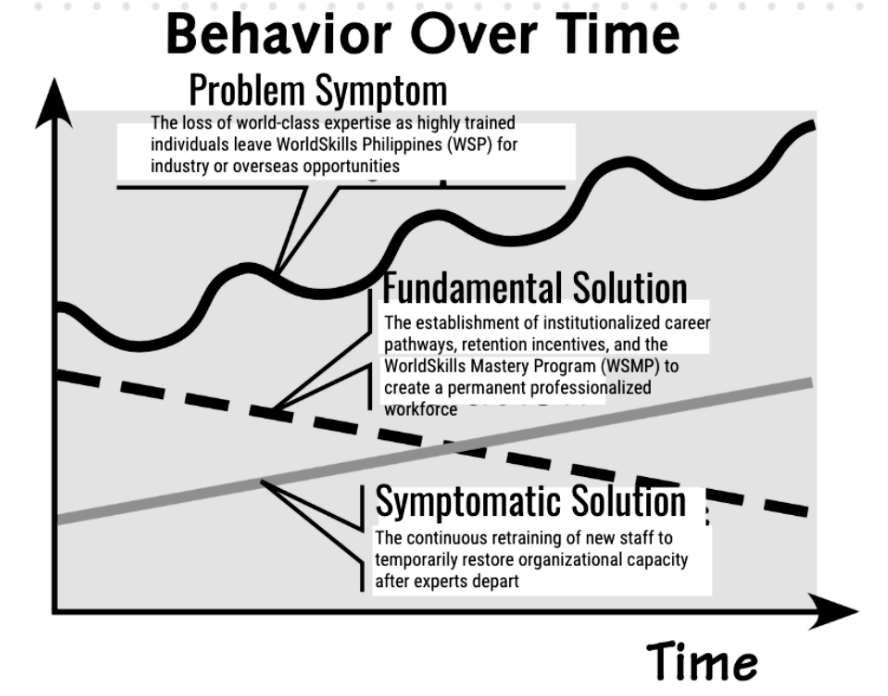
Experts leave for industry; retraining new staff drains resources without solving root cause.
Without career pathways, WSP becomes a "talent pipeline" for industry rather than a destination for mastery.
Gold Standard Accreditation ⭐ (Pillar 3): Implement PQF-aligned WorldSkills Mastery Program with CSC salary grade linkage to create retention incentives.
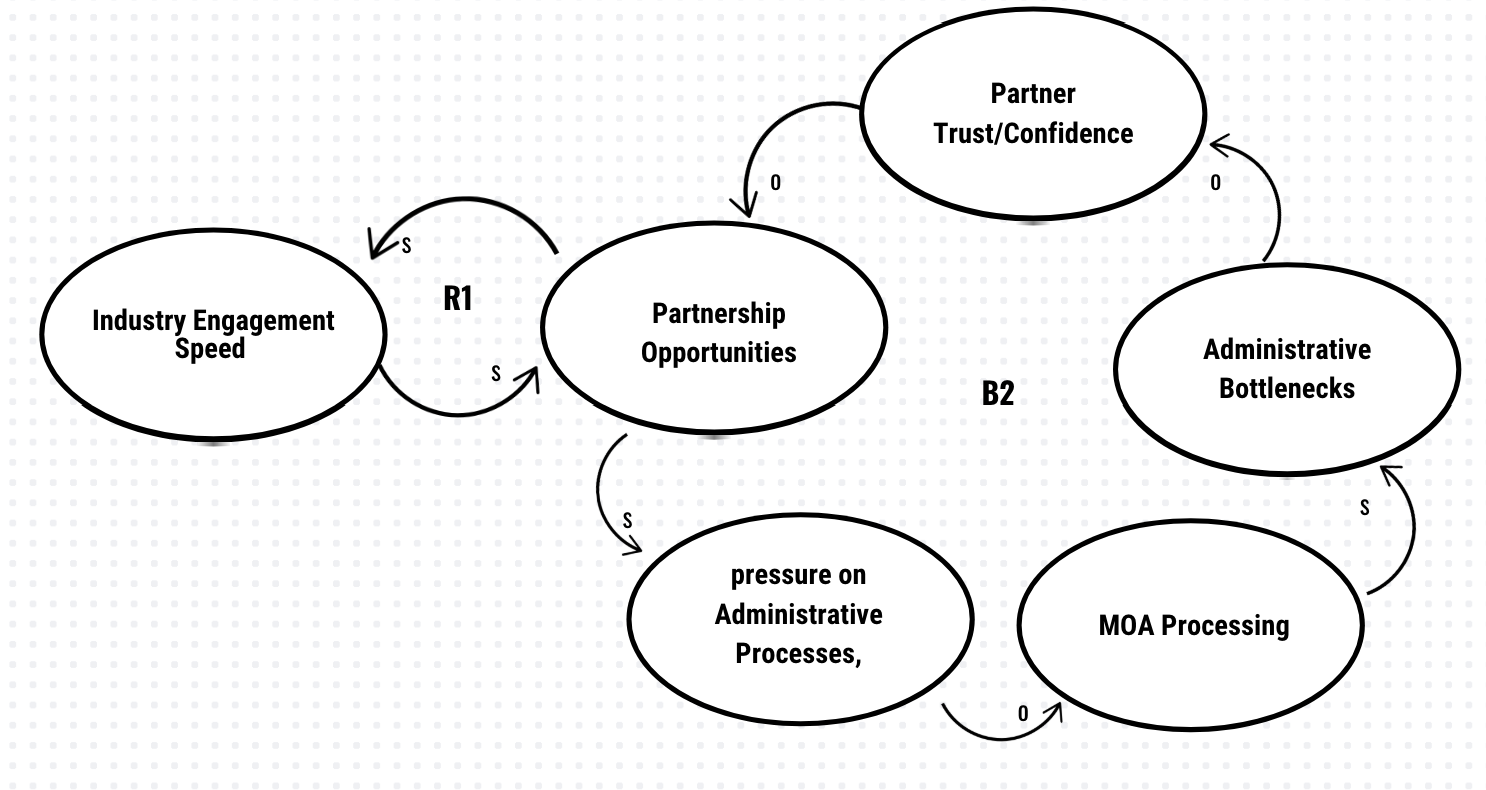
Fast industry partnerships collide with slow MOA approvals, eroding partner trust over time.
Partners are attracted by WSP’s speed and vision but repelled by administrative delays. Bridging this gap requires process innovation, not just goodwill.
Operational Lead-Time Compliance (Pillar 6): Ensure 100% of MOAs are signed 3+ months before events via dedicated fast-track unit.